The Rule of Law
The rule of law is a convenient myth. People do not like to hear this because it makes them uncomfortable. But I think it is a defensible statement. I am specifically talking about the criminal law and its relationship to policing: how the police selectively use and cynically manipulate it. Occasionally, civil liberties lawyers or human rights professionals will waive their hands with rhetorical statements such as “the police” or “Boris Johnson” or “the Tories” are “undermining the rule of law”. These statements are so frequent – essentially a cliché at this point – that one wonders why the logical inference is not then outright stated, i.e. Does the ‘rule of law’ even exist? Are the police its sincere guardians?
To simplify, the ‘rule of law’ consists of two ideas: (1) that the population of a state is governed and policed by laws, not the arbitrary decree or whim of politicians or the agents of the state; (2) that the law applies to everyone, equally, at all times – whether they live on a council estate or in a townhouse makes no difference.
The question of policing in relation to the rule of law is vital because the police have extraordinary powers of force. The rule of law, in relation to policing, rests on the idea that if the police are to have such extraordinary coercive powers, they should not be able to use them arbitrarily – i.e. police action should be governed by the law. Does this happen in practice?
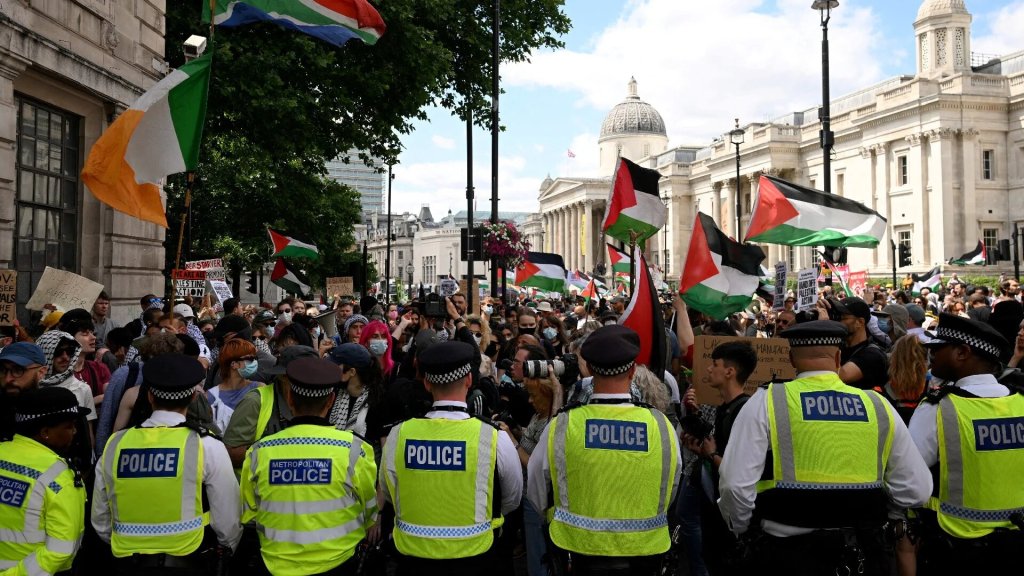
Following the proscription of the non-violent direct action group, Palestine Action, as a terrorist organisation, there have been several instances where individuals not associated with Palestine Action, and not endorsing them have been threatened by the police with terrorism legislation. Most absurdly, Kent police have threatened a protester under terrorism legislation for holding a Palestine flag.
There’s a clear mismatch here between the actions in question and the laws being applied. There are two avenues for interpretation: (1) the officers in question are stupid and think the law here ‘fits’ when it quite clearly does not; (2) the officers are well aware of the technical mistake being made here, but don’t care, they cynically apply the law in order to meet specific policing objectives, the law is a tool. These two options are in many respects vastly different; they open up different analytical conclusions if the question of intent is what you consider matters. However, what they share is that they both demonstrate the limitless and unrestrainable character of police discretion itself. This should give us pause.
In the moment, it does not matter why the officer has applied the law incorrectly. Whether it is because he is stupid or cynical is to some extent irrelevant. The point is that he can simply deploy what he claims the law is, and as a result, he can arrest, move on, intimidate activists, etc, with the sheen of ‘the law’ as cover. He can do this because he is a police officer. Unlawful arrests may ultimately be subject to legal corrections later on – i.e. people suing certain forces for specific actions. But these lawsuits occur much time after the fact and the damage has already been done – protest quelled, speech restricted, activism stifled, etc.
So, what is going on here?
Discretion
Much academic work in the field of ‘Police Studies’ has been spent documenting what the police do every day. One of the earliest discoveries in the field (and one that has been proven and re-proven by numerous studies) is that the police, despite conventional wisdom, are not primarily doing work concerned with crime control. Their mandate is broad. Another related discovery is that when the police are engaging with the criminal law, they are doing so in ways that are selective and cynical.
This is partly because of this curious thing called discretion. Discretion is the capacity for agents of the state to choose to deploy or not deploy certain powers. It is also the capacity to use certain powers in differing, arguably highly flexible ways. With the police, it is often the ability to use powers well beyond what the formal intention of the law was when it was written. The police have breath-taking discretionary powers. Their powers are more extensive than the discretionary capabilities of other agents of the state, such as decision makers at the Department of Work and Pensions. This is for several reasons:
- They have a monopoly on force – which means decisions made on the streets are not necessarily questioned. People comply. Much is written about the obvious physical power of the police. This physical power creates another kind of power: a symbolic one. They are the symbol of authority. Respect, obedience, compliance, fear can be induced with little effort; merely a human figure with the police uniform itself can induce these emotions. The police are often referred to as simply ‘the law’ – this folk expression reveals much about their symbolic power, and also about what ‘the law’ might mean in our society.
- Sections of the law are intentionally vaguely written so as to give officers vast leeway in their coercive power. Public order legislation rests on whether individuals’ actions create “harassment, alarm, or distress”. The document regulating stop and search, PACE Code A, says that an individual can be searched for “suspicious activity”. “Suspicious activity” is never defined in the document.
- The police patrol is done in twos. Their actions are not necessarily seen by their managers or potential oversight institutions. Much police decision-making is totally invisible. It has been remarked before that the police institution is peculiar in the sense that the lower down you go, the higher the discretionary power the individuals have – this is the total opposite of most institutions.
- Attempts to reform discretion, i.e. body cameras, are easily subverted. Bodycams can be turned off. The footage recorded can mysteriously “go missing”.
Order, Order
Another question to ask is this: when the police are using their discretionary powers, what are they aiming to do? If the law is applied cynically as well as selectively, then the aim is not a sincere and sentimental attachment to the law or the values of neutral liberal governing. It is not for ‘the law’s sake’ in other words. A core part of the police mandate is order-maintenance. The police, when they use the law in a selective manner, are doing so to serve order-maintenance objectives.
In the case of Palestine activism – it is considered disorderly, scary, unseemly, barbaric, violent (even if obviously nonviolent). It is a threat to order. Therefore, the law must be used to ‘solve’ the situation. This is what the police do: they enter situations that are disorderly (or they categorise as such), and they use their powers to manage, dilute or outright stop the perceived disorder. This dynamic is what runs beneath every accusation of police misconduct or police disproportionality. Once you understand this function it also explains why they think their actions are totally proportionate.
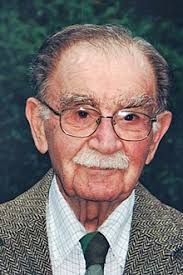
One of the founders of Police Studies was a man called Egon Bittner. Bittner’s theorisation of the police is still relevant. It is especially relevant for a left that is confused and disorientated by why this is happening. Bittner unintentionally anticipates this – he notes of all the institutions of government the police are “at once the best known and least understood” (2005, p.150). His definition of the police function is clarifying. I quote two passages from one of his most famous essays in full:
My thesis is that police are empowered and required to impose or, as the case may be, coerce a provisional solution upon emergent problems without having to brook or defer to opposition of any kind, and that further, their competence to intervene extends to every kind of emergency, without any exceptions whatever. (2005, p.150)
[…]
Once a policeman has defined a situation as properly his business and undertakes to do something about it, he will not desist till he prevails. That policemen are uniquely empowered and required to carry out their decisions in the ‘then-and-there’ of emergent problems is the structurally central feature of police work. There can be no doubt that the decisive and unremitting character of police intervention is uppermost in the minds of people who solicit it, and that persons against whom the police proceed are mindful of this feature and conduct themselves accordingly (2005, p.164)
This definition allows us to conclude several things:
- It is immediately obvious why there are countless scandals of the police ‘going too far’. The police-role has a limitless quality to it, despite reform efforts.
- The police deal with emergency/disorderly situations and exert a solution onto them to restore ‘order’. This involves, to use police parlance, ‘split second decision-making’. This means the solutions imposed may tend to be (as human rights NGOs never fail to remind us) ‘disproportionate’.
- If the core function of the police-role is imposing “provisional solutions” onto emergency/disorderly situations, then the law is secondary. It must be so. The phrase ‘Law and Order’ should therefore be reversed: ‘Order and Law’.
- It should not be surprising that certain officers use terrorism powers in what appears to be a ridiculously zealous and absurd manner. The left’s response to this will no doubt, in certain quarters, take a legalistic approach. I am not totally against it as a form of rhetoric: “the police have broken the law” has a certain power to it due to the contradiction it evokes. However, at the broader strategic level, sincerely believing that the best approach should be to make the police comply with the law is a dead end, a structural impossibility. This is not to discard moves such as encouraging those falsely arrested to pursue compensation for false arrests, and so on. They should. But crucially police abuse isn’t a legal question at all, as weird as that might seem.
- If the police role is centrally about order-maintenance, with the dutiful application of the law being secondary (perhaps less than secondary), this means that the institution itself always poses a potential democratic threat. Politicians granting them extra powers should always be interrogated, stopped.
References
Bittner, E. (2005) ‘Florence Nightingale in Pursuit of Willie Sutton: a theory of the police’, in T. Newburn (ed.) Policing: Key Readings. Devon: Willan Publishing, pp.150-172.
 State Power
Leave a comment